Photo by Rachel Girard
How do you feel about exercise?
Both expert and conventional wisdom tell us that physical activity is healthy, full stop — so the most active people must be the healthiest, right? Athletes, for example, are seen as the gold standard of health and fitness. But fitness and health, while often correlated, aren't the same thing. Fitness describes the body's ability to efficiently and effectively perform physical tasks. Health describes the combination of physical, mental, emotional, spiritual, and social wellbeing.
My work over the years has been steeped in fitness, wellness, and rehab spaces, and I notice that it’s common to end up in reductionist conversations that aren't actually centering fitness or health, but safety. It's as though people have to be moving in "safe" ways to promote health, and so we need to establish clear-cut rules about what is safe and what isn't.
The reality is that exercises and movement practices are not inherently safe or unsafe. Risk depends on the capacity and preparation of the individual and the context of the activity — which will differ wildly from person to person, and will often look different in the same body at different times or under different conditions. For example, I know I can safely deadlift over 100 lbs from the floor. I'd never have someone brand new to lifting, or returning after a back injury, start there because it wouldn't be safe. I also know I'm less likely to experience pain or injury with that lift if I've slept well, feel mentally well, have sufficiently fueled my body, and have done a little prep work beforehand. (Will I still try the lift in less than ideal circumstances? Therein lies the question!) See, I couldn't even give that one example without an annoyingly long list of caveats.
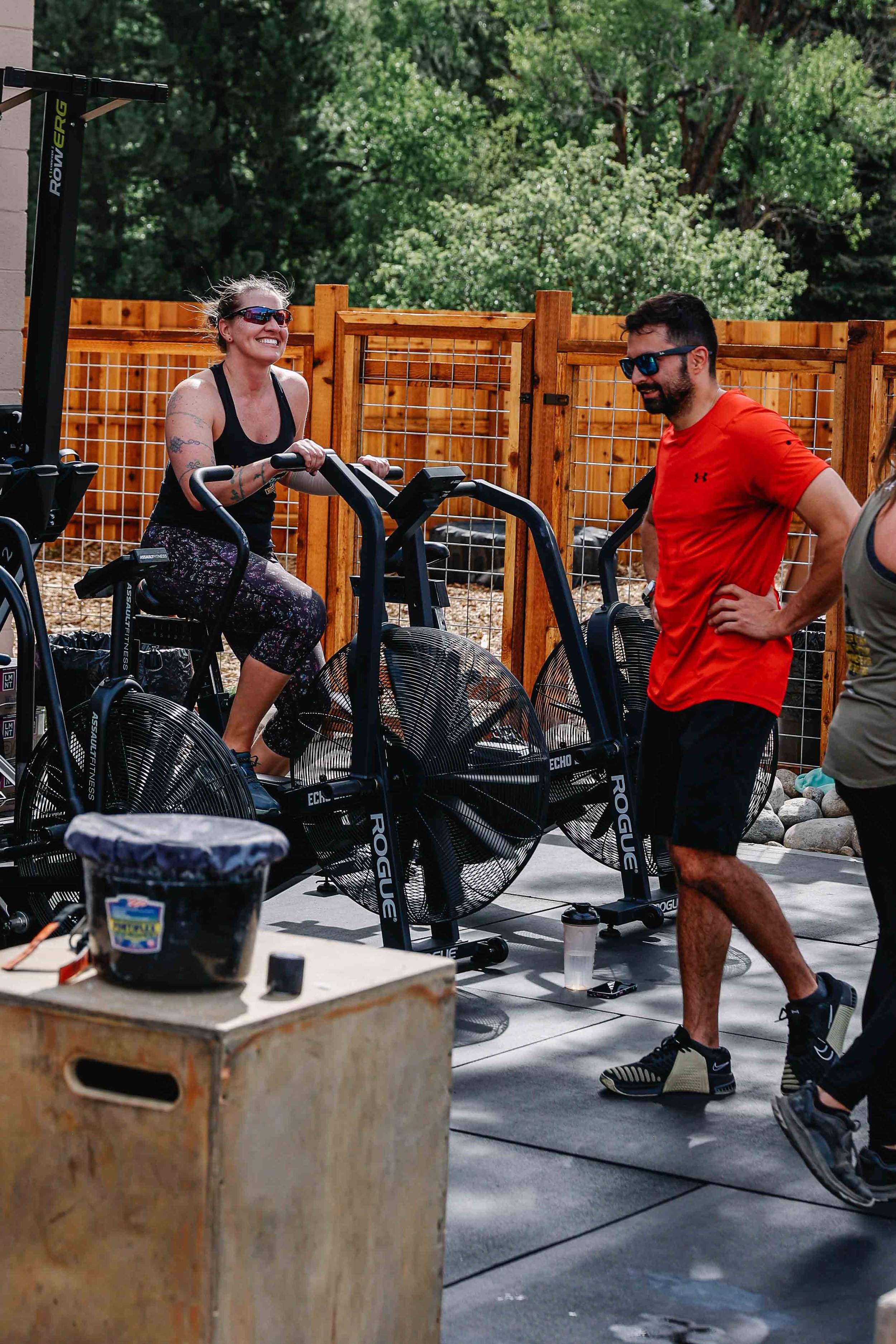
Sometimes the health benefits of physical activity live in the fun, the emotional satisfaction — like achievement or overcoming a challenge — or in the social engagement around it. And sometimes physical activity isn't healthy at all, like when someone overtrains without sufficient recovery, uses medications or other substances to improve performance or manage emotional dysregulation, gets injured from pushing beyond their capacity, or becomes socially isolated for the sake of training.
Given these (and many other unmentioned) nuances around health, fitness, and safety, I've found — both personally and professionally, in my coaching and teaching — that it helps to make distinctions around individual needs and goals, and how different activities fit into the overall picture.
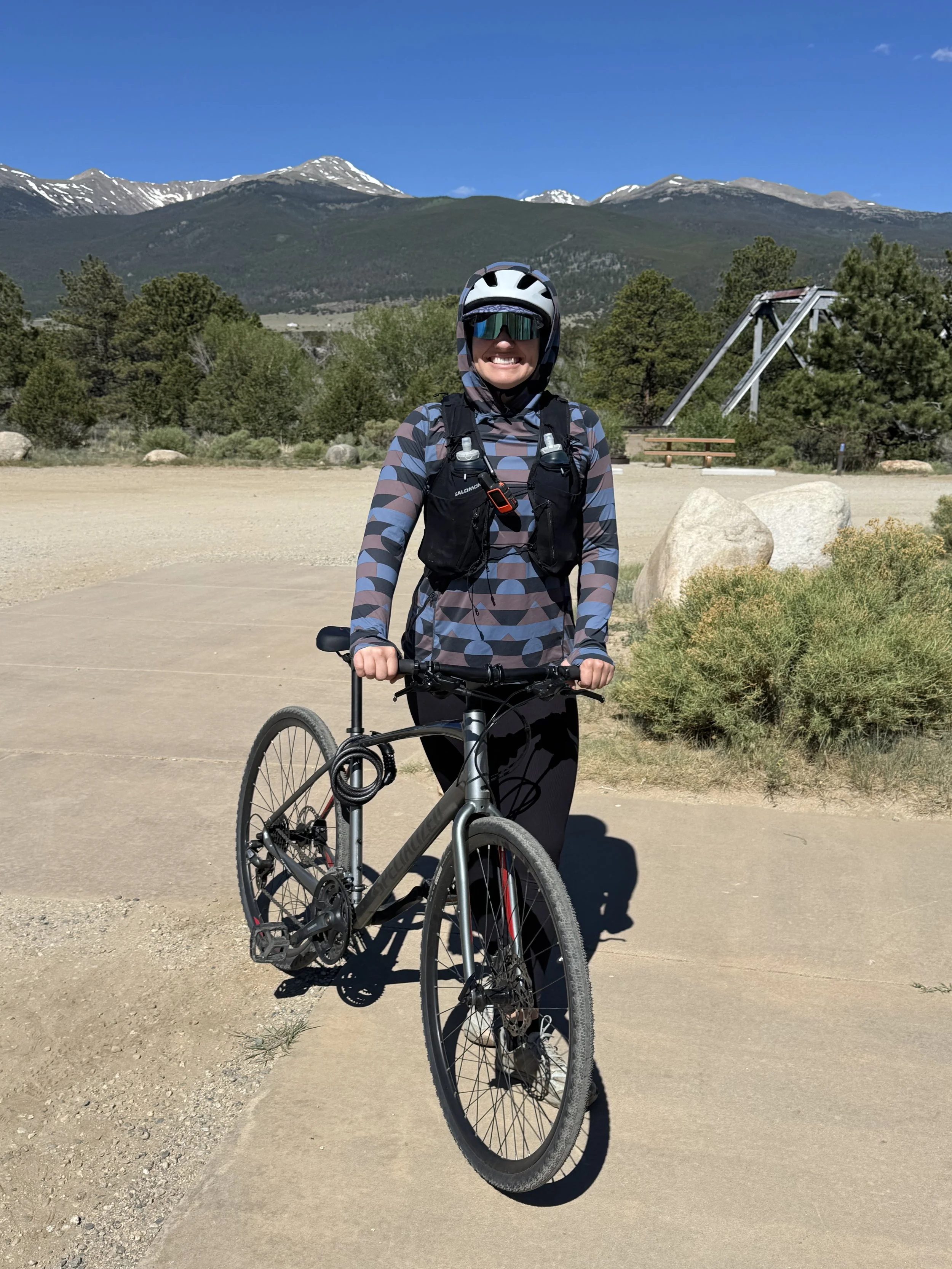
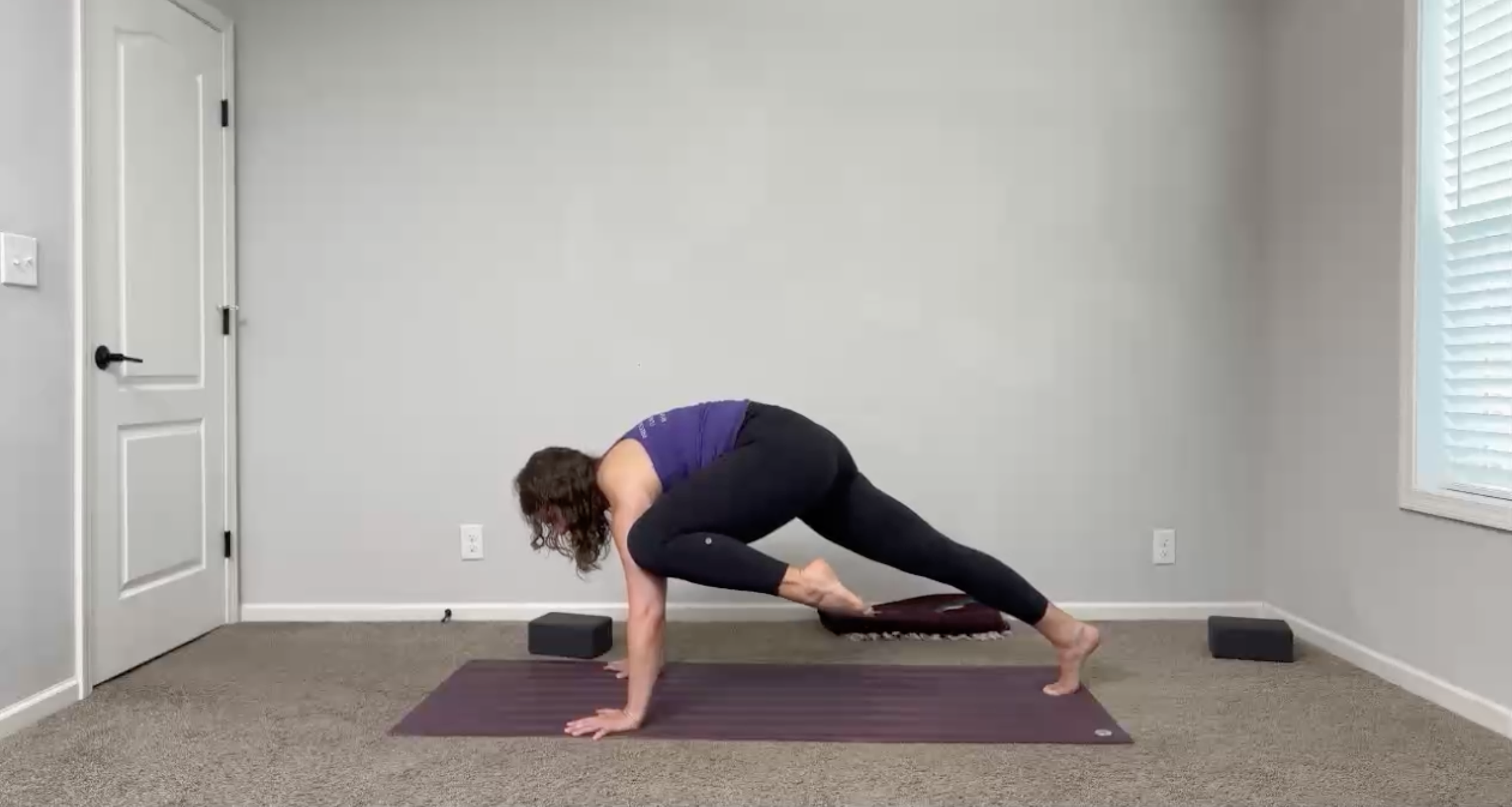
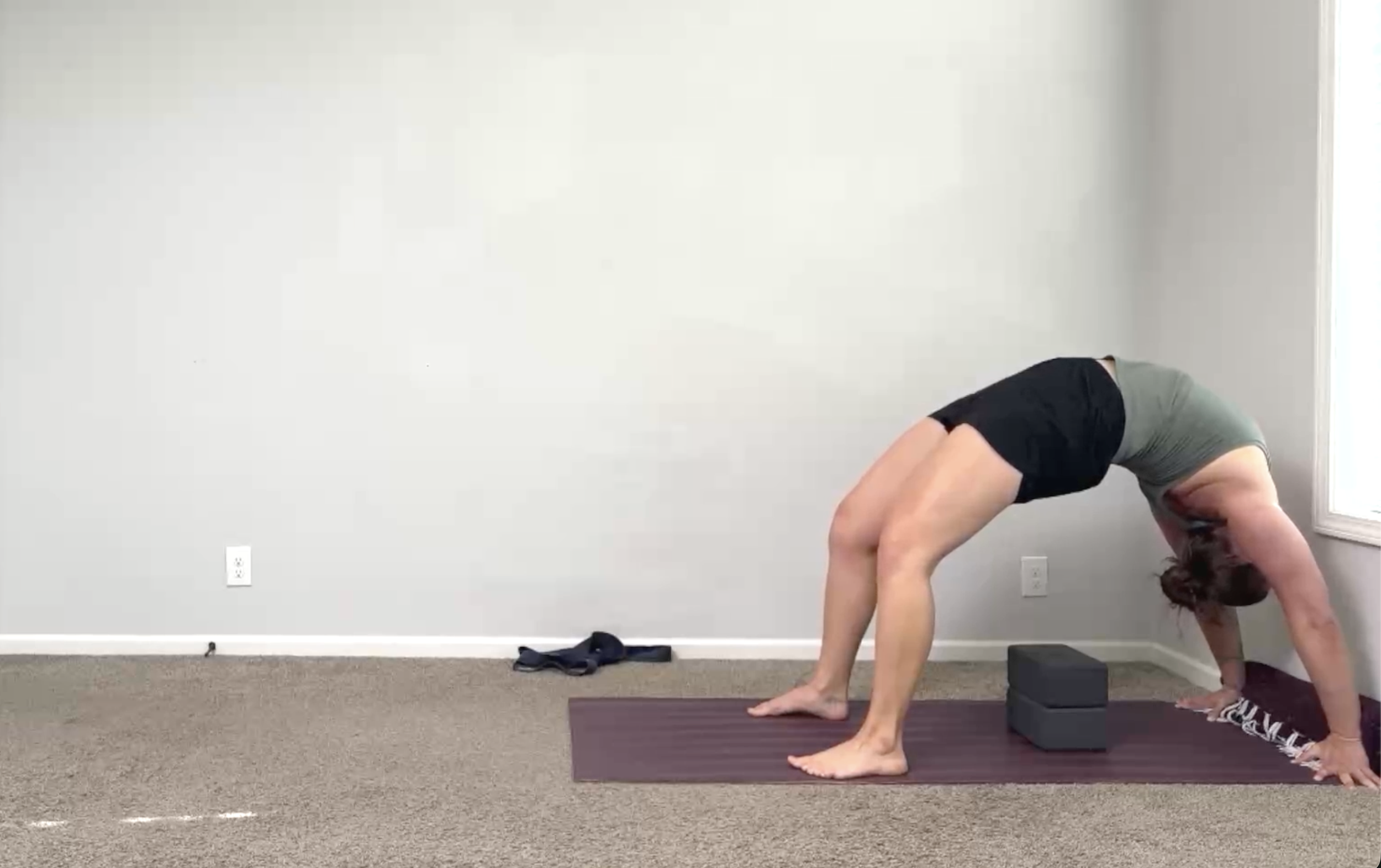
Using myself as an example: my own physical activities range from yoga and strength training, to hiking, to beach volleyball and newly mountain biking. Generally, I try to identify whether I'm prioritizing mental/emotional wellbeing, social wellbeing, or physical wellbeing — and sometimes an activity covers all three. If I'm taking a yoga class, I'm usually getting a little health-promoting activity across the board. But in that same class, perhaps we’re attempting a pose or working at an intensity that could, in some bodies under some circumstances, be physically risky. Nobody really needs to do an urdhva dhanurasana (full wheel pose), after all. So do I skip it, or give it a go? If it's something I practice regularly, the risk is probably lower. If I'm mentally or physically exhausted, it might be higher. Is the benefit of doing hard things just to know that I can, worth the risk I'm assuming? In my case, I've practiced that particular pose regularly for over 25 years, so it generally feels low-risk. I also know a lot of alternatives I'm happy to do if it doesn't feel worth it. Meanwhile, after my seventh knee surgery last November, when I go out on the mountain bike, I'm getting off and walking anything that feels even remotely sketchy. The risk there feels exponentially higher for me than the risk of a big backbend, and I think we could find plenty of people for whom the opposite is true.
I also notice that internal and external pressure can make people lose sight of why they're moving in the first place. I think of it as the "new year challenge" phenomenon: every January, people jump into physical activity with a fervor and frequency far beyond their capacity, and end up hurt, burnt out, or both.
Nobody needs to run a marathon, do the splits, or deadlift twice their bodyweight to be healthy. And it's completely fine to do those things if they light you up, make you feel like a badass, or make you more competitive in a sport you love. When moving for physical health, the key is to advance progressively — not impulsively, not in big jumps, and not because a friend is doing more. And if you're exercising for health, consider it from a multidimensional perspective. Are you sleeping well? Getting sufficient nutrients? Feeling psychologically and emotionally okay? Do you have people and places where you feel you belong? These are all key components of health, and they contribute directly to your physical capacity, too.
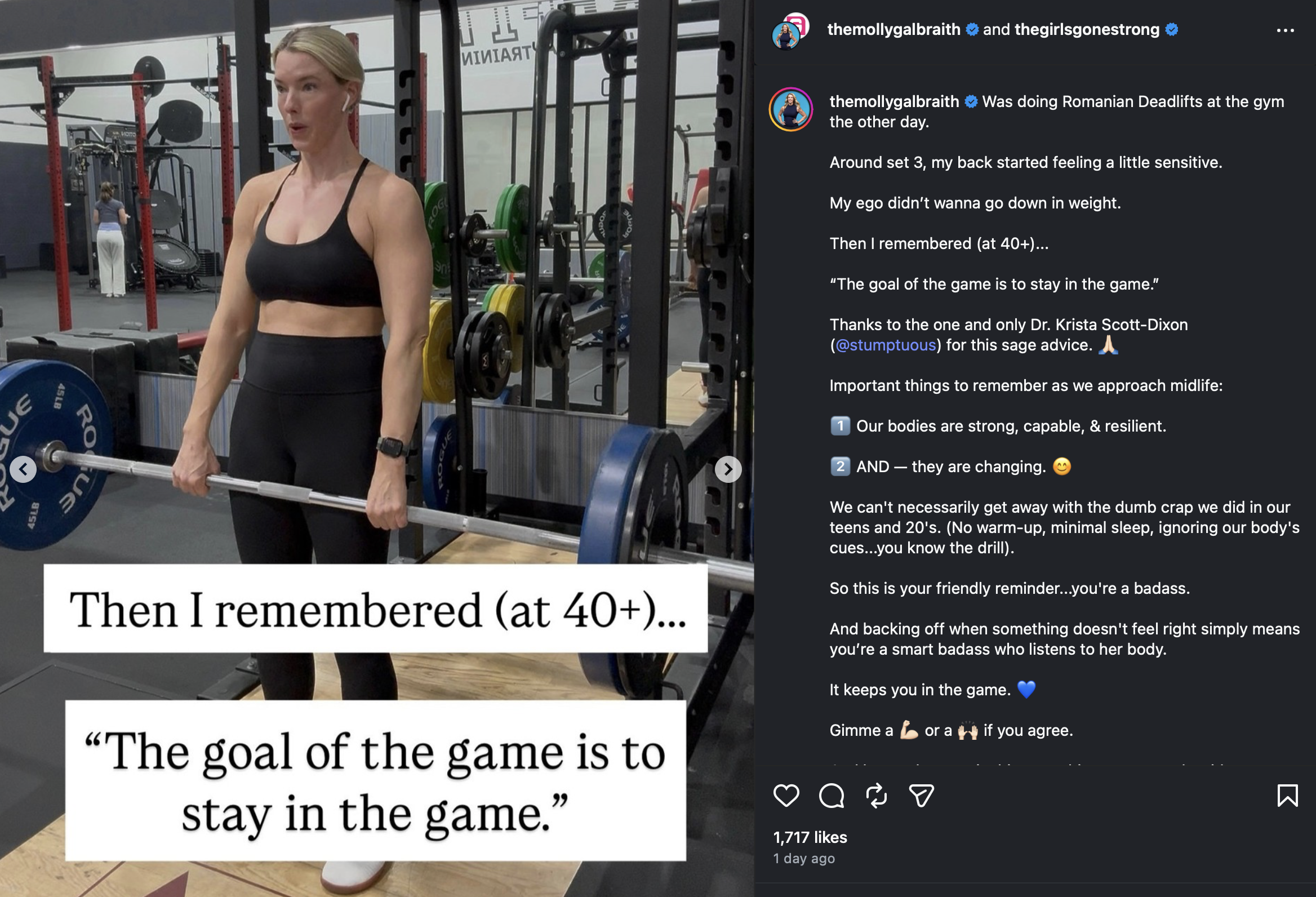
The other day I saw an Instagram post from Molly Galbraith checking her ego against her goals. She wrote, "The point of the game is to stay in the game." That was her priority during this activity, at this point in her life. Maybe if you're in the Olympics, the point of the game is to win the game, and physical health takes a bit of a back seat. Both perspectives are valid. My hope is that each of us, at least most of the time, makes conscious choices about how we engage with physical activity.
Ultimately, instead of labeling activities as "safe" or "unsafe," or practices as "good for us" or "bad for us," the question becomes: How risky is this thing for me, in this moment — and do the potential benefits to my wellbeing outweigh that risk? For me. In this moment.
Most people I come across want to grow their capacity in some way — physical or otherwise. That's great! And, as my yoga teacher Christina often says, "More is more, unless more is less, in which case, less is more." So stay curious, stay aware, and keep moving.
Want help with this type of discernment in your own life, or with staying active in the midst of pain or injury?